Physiotherapy · Knee · Exercise
Knee Pain ExplainedCauses, Exercise, Scans & Physiotherapy in Singapore
Knee pain when walking downstairs? Pain during squats? An ache after running, tennis or pickleball? Or stiffness that makes you wonder whether your knee is starting to “wear out”?
Knee pain is extremely common, but the cause can vary considerably from person to person. Symptoms may relate to the area around the kneecap, osteoarthritis, a tendon, a meniscus or simply a sudden increase in activity that the knee is not currently prepared to tolerate.
The important point is that knee pain does not automatically mean your knee is damaged, nor does it automatically mean you need to stop exercising. In many cases, appropriate activity modification and progressive exercise are important parts of recovery.
At NXS Collective in Clarke Quay, Singapore, our approach is to understand what your knee is struggling to tolerate, what may be contributing to your symptoms and what you need the knee to be able to do again.
Load & capacity
Why does my knee hurt?
The knee is exposed to substantial forces during everyday activities. Walking, climbing stairs, running, squatting, jumping and changing direction all require the muscles around your hip, knee and ankle to work together.
Knee pain can develop when the amount of load placed on the knee exceeds what it is currently prepared to tolerate. For example, you might:
- Suddenly start running more
- Increase your tennis or pickleball frequency
- Add heavier squats to your gym programme
- Return to exercise after a long break
- Increase the number of hills or stairs you are doing
- Spend much more time walking while travelling
This does not necessarily mean you have damaged the knee. Sometimes it simply means that your current workload has exceeded your current capacity.
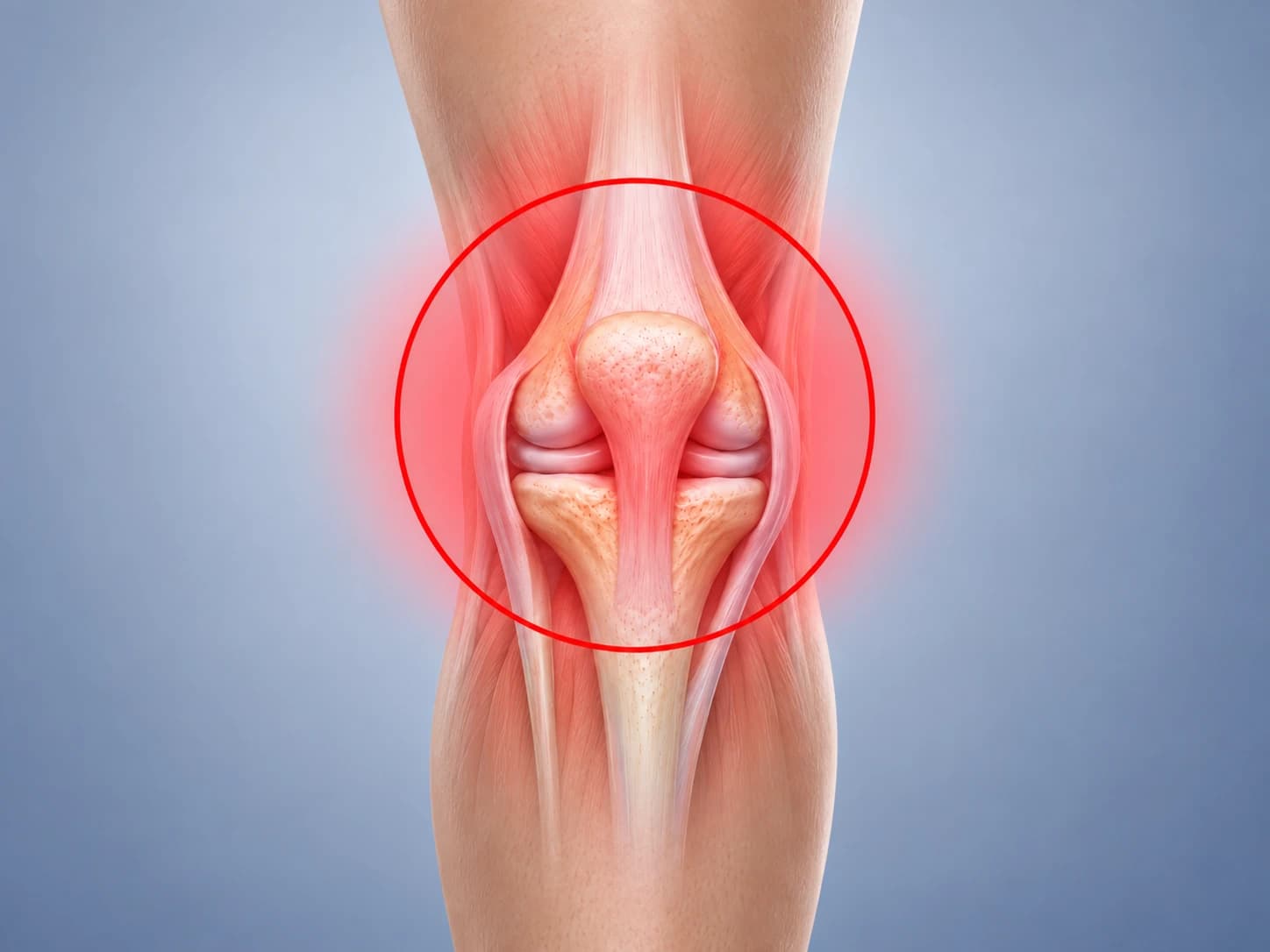
Other knee problems can have clearer structural causes, particularly after significant trauma. This is why understanding how the pain started, where it hurts and what activities aggravate it is such an important part of assessment.
A common presentation
Why does my knee hurt when going downstairs?
Pain when going downstairs is one of the most common knee complaints. A common cause is patellofemoral pain, sometimes called anterior knee pain or “runner's knee”.
Patellofemoral pain usually presents as pain around or behind the kneecap and is commonly aggravated by activities that load the knee while it is bent:
- Going upstairs or downstairs
- Squatting
- Running
- Jumping
- Prolonged sitting
- Kneeling
When you walk downstairs, the quadriceps muscles have to control your body weight as the knee bends. This increases the demand on both the quadriceps and the patellofemoral joint. If the knee currently has reduced capacity to tolerate that demand, pain may appear.
The solution is therefore not necessarily to avoid stairs forever. It is often to gradually improve the knee's ability to tolerate them again.
Staying active
Should I exercise if my knee hurts?
In many cases, yes. Exercise is one of the best-supported treatments for several common knee conditions.
For patellofemoral pain, current best-practice guidance recommends education combined with knee-targeted exercise, with additional treatment selected according to the individual presentation. For knee osteoarthritis, exercise is also considered a core treatment.
Large reviews of exercise for knee osteoarthritis have found improvements in pain and physical function compared with no treatment, usual care or limited education, although the size of the benefit varies between individuals.
Pain does not automatically mean “stop exercising”. Often it means finding an appropriate level of exercise and progressively building from there.
Is pain during exercise bad for my knee?
Not always. It is possible to experience some discomfort during rehabilitation without causing further damage. This is particularly relevant in conditions such as patellofemoral pain and knee osteoarthritis.
However, this does not mean you should ignore all pain and push through everything. We also consider:
- How severe the pain is
- Whether your movement changes significantly
- Whether symptoms settle afterwards
- How the knee responds later that day
- How it feels the following morning
This helps determine whether the current exercise dose is appropriate or needs adjusting.
Understanding arthritis
Do I have knee osteoarthritis?
Osteoarthritis becomes more common as we get older, but knee pain does not automatically mean you have arthritis. Typical features can include:
- Pain related to activity
- Stiffness after sitting or resting
- Reduced knee movement
- Difficulty with stairs
- Difficulty walking longer distances
- Reduced confidence with physical activity
Osteoarthritis is not simply a story of the knee progressively “wearing away”. Symptoms and function can change considerably even when structural changes are present.
This is one reason treatment focuses heavily on what you can do, how strong you are and what activities you need to return to, rather than simply what an X-ray looks like.
If I have osteoarthritis, should I avoid exercise?
No. This is one of the biggest misconceptions surrounding knee arthritis. People sometimes become worried that exercise will “wear the knee out faster”, but current clinical guidelines recommend exercise as a core treatment for knee osteoarthritis.
- Quadriceps strengthening
- Hip strengthening
- Sit-to-stand exercises
- Squats
- Step exercises
- Walking
- Cycling
- Aerobic conditioning
The appropriate starting point depends on your current symptoms and ability. Someone with severe pain walking 100 metres requires a very different programme from someone with mild knee osteoarthritis who wants to continue playing tennis.
Scans & structural findings
Do I need an X-ray or MRI for knee pain?
Not always. Scans can be extremely useful when there is a clear reason for them, but they are not automatically required for every painful knee.
Knee osteoarthritis can often be diagnosed clinically, and imaging is not routinely required unless there are unusual features or another diagnosis is suspected. MRI scans also frequently show structural findings in people who have no knee pain at all.
This does not mean MRI findings should be ignored. It means that a scan result needs to be interpreted alongside your symptoms, history and physical examination. Seeing terms such as “meniscus tear” or “cartilage damage” on a scan does not automatically tell us why your knee hurts or whether surgery is required.
Does knee pain mean my meniscus is torn?
Not necessarily. Meniscal injuries can cause knee pain, particularly after twisting injuries. However, meniscal changes can also appear on MRI in people who have no pain. A clinician will also consider:
- How the injury occurred
- Where the pain is located
- Whether the knee swelled
- Whether you experience catching or locking
- Your knee movement and strength
- How the knee behaves during functional activities
This allows the scan — if one is required — to be interpreted within the bigger clinical picture.
What about clicking, cracking or popping in the knee?
Knees commonly make noise. You may notice:
- Clicking
- Cracking
- Popping
- Grinding
- Creaking
Noise by itself does not automatically mean there is a serious problem. What matters more is whether the noise is accompanied by:
- Pain
- Swelling
- Locking
- Instability
- Loss of movement
- Recent significant trauma
A completely painless knee that occasionally cracks is very different from a knee that suddenly locks after a twisting injury.
Treatment options
Where do dry needling, manual therapy, taping and shockwave fit?
Exercise and progressive strengthening are important parts of rehabilitation for many types of knee pain, but other treatments can sometimes be useful for reducing symptoms and helping you participate more comfortably in rehabilitation.
Depending on the cause of your knee pain, this may include:
- Manual therapy and joint mobilisation
- Massage and soft-tissue treatment
- Dry needling
- Taping
- Shockwave therapy
For patellofemoral pain, current best-practice guidance recommends exercise and education as the foundation of treatment, while additional treatments such as manual therapy and taping may be considered depending on the individual presentation.
Dry needling may be used to help manage pain and muscle sensitivity around the knee. Research in knee osteoarthritis suggests that it may provide short-term improvements in pain and physical function, although longer-term benefits remain less clear.
Shockwave therapy is more relevant to certain tendon-related knee conditions, such as persistent patellar tendinopathy, rather than being a treatment for all knee pain.
These treatments are not interchangeable and are not necessary for everyone. Hands-on treatments and modalities may help reduce symptoms and make rehabilitation easier. Strengthening and progressive loading are what ultimately help rebuild the capacity of the knee.
Recovery & recurrence
How long does knee pain take to recover?
There is no single timeline. Recovery depends on factors such as:
- What is causing the pain
- How long symptoms have been present
- Whether there was a traumatic injury
- Your current strength
- Your activity level
- Your work or sport demands
- How irritable the knee currently is
- How consistently rehabilitation can be progressed
Someone with mild patellofemoral pain after suddenly doubling their running mileage may progress very differently from someone with longstanding osteoarthritis and significant strength loss. This is why rehabilitation needs to be individualised.
Why does my knee pain keep coming back?
Often, the important question is not simply “How do we make the pain disappear?” It is “What does your knee need to be capable of doing?”
If your knee feels better after two weeks of rest but becomes painful every time you return to tennis, the knee may not yet have regained the capacity required for tennis. The same principle applies to:
- Running
- Hiking
- Squatting
- Climbing stairs
- Lifting
- Padel
- Pickleball
- Returning to the gym
Rehabilitation should eventually resemble the demands you want your knee to tolerate.
When to seek care
When should knee pain be assessed urgently?
Most knee pain does not require emergency treatment. However, medical assessment may be appropriate when there is:
- Significant trauma
- Inability to bear weight following an injury
- Major swelling soon after injury
- Obvious deformity
- A knee that is genuinely locked and cannot straighten
- Significant instability after trauma
- Fever, redness or marked warmth around the joint
- Severe or rapidly worsening symptoms
If you are uncertain, an appropriate healthcare professional can help determine whether further investigation is required.
NXS Collective
Knee pain physiotherapy at NXS Collective Singapore
At NXS Collective, we do not want to simply tell you that your knee is “weak” or that you should stop doing the activity that hurts. We want to understand what your knee currently struggles to tolerate and what needs to improve.
01
Understanding your symptoms
We look at where your knee hurts, how it started, what movements aggravate it and how your symptoms respond to activity.
02
Assessing your knee
We assess relevant knee movement, joint structures and clinical tests to determine what may be contributing to your symptoms.
03
Objective strength testing
Where appropriate, we may assess quadriceps, hamstring and hip strength, compare the results side-to-side and track measurable progress over time.
04
Looking at how you move
If your knee hurts during stairs, squats, running or sport, we may assess those movements — including step-downs, balance, hopping or sport-specific tasks.
05
Building your rehabilitation plan
Treatment may combine education, activity modification, progressive strengthening, movement retraining and selected hands-on or modality-based treatment.
Rehabilitation is what prepares your knee for life outside the treatment room.
Learn more about our physiotherapy approach and meet Samuel.
Knee pain stopping you?
Understand what is limiting your knee. Build it back stronger.
If knee pain is making you avoid stairs, squats, running, tennis or other activities you enjoy, an assessment can help you understand what is actually limiting you. Rather than simply being told to “rest your knee”, we can assess your strength, movement and symptoms and build a rehabilitation plan around the activities you want to return to.
View Our Availability
Book a Knee Pain Physiotherapy AssessmentNXS Collective provides individualised physiotherapy and rehabilitation for kneecap pain, knee osteoarthritis, sports-related knee conditions and return to exercise in Clarke Quay, Singapore.
Not sure if physiotherapy is the right next step? Speak with Samuel through a complimentary physiotherapy phone consultation.
Request a Complimentary CallThe phone consultation is intended for initial guidance only and does not replace an in-person physiotherapy assessment or medical diagnosis.
Evidence base
References
- Willy RW, Hoglund LT, Barton CJ, et al. Patellofemoral Pain. Journal of Orthopaedic & Sports Physical Therapy. 2019;49(9). doi:10.2519/jospt.2019.0302.
- Neal BS, Lack SD, Bartholomew C, Morrissey D. Best practice guide for patellofemoral pain based on synthesis of a systematic review, the patient voice and expert clinical reasoning. British Journal of Sports Medicine. 2024;58(24):1486–1495.
- Manojlović D, Kozinc Ž, Šarabon N. Trunk, Hip and Knee Exercise Programs for Pain Relief, Functional Performance and Muscle Strength in Patellofemoral Pain: Systematic Review and Meta-Analysis. Journal of Pain Research. 2021;14:1431–1449.
- Lawford BJ, Hall M, Hinman RS, et al. Exercise for osteoarthritis of the knee. Cochrane Database of Systematic Reviews. 2024;12.
- National Institute for Health and Care Excellence (NICE). Osteoarthritis in over 16s: diagnosis and management. NICE Guideline NG226. 2022.
- Culvenor AG, Øiestad BE, Hart HF, Stefanik JJ, Guermazi A, Crossley KM. Prevalence of knee osteoarthritis features on magnetic resonance imaging in asymptomatic uninjured adults: a systematic review and meta-analysis. British Journal of Sports Medicine. 2019;53:1268–1278.
- French HP, Abbott JH, Galvin R. Adjunctive therapies in addition to land-based exercise therapy for osteoarthritis of the hip or knee. Cochrane Database of Systematic Reviews. 2022;10.
- Arias-Buría JL, et al. The Effectiveness of Dry Needling in Patients with Hip or Knee Osteoarthritis: A Systematic Review and Meta-Analysis. 2022.
- Charles R, Fang L, Zhu R, Wang J. The effectiveness of shockwave therapy on patellar tendinopathy, Achilles tendinopathy, and plantar fasciitis: a systematic review and meta-analysis. Frontiers in Immunology. 2023;14:1193835.
This article is intended for general educational purposes and does not replace an individual medical or physiotherapy assessment.